
Alconbury Weald
Alconbury Weald is built around a simple idea: people should be able to move around their community in ways that support their health, reduce costs and strengthen their connection to nature.

The Challenge
Car use remained the go-to choice for many people. Travel partners promoted alternatives, but the messages didn’t always align in a way the community could easily follow.
Residents and commuters needed a clear route into change.
We captured the needs of different groups, from young people reliant on lifts to commuters weighing cost, safety and time. This grounded the strategy and helped partners understand the behaviours behind the data.
All of this data is useful if it removes complexity.
We introduced the Away framework: Share Away, Ride Away, Tap Away and Explore Away. Each one represents a clear action and replaces a long list of competing brands and services.
Working with design partners, we created a travel identity that was easy to recognise across the community. It now appears on wrapped buses, in digital content, and in a new travel section on the Alconbury Weald website. The messaging focuses on healthier movement, cost savings, local routes and the well-being benefits of leaving the car at home.
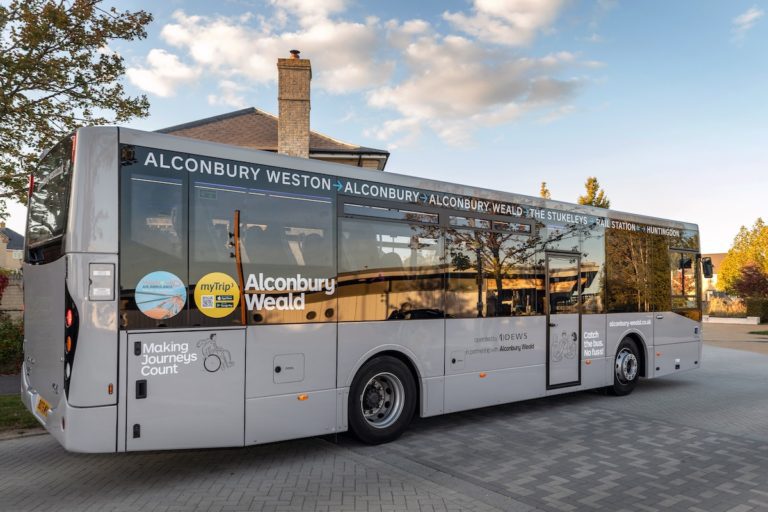
The programme is built to grow with the place and community it serves and supports